Dental Implants in Vietnam: What They Are, How the Process Works and How Much You Can Save
If you are missing one or more teeth, you have probably heard of dental implants. They are widely considered the gold standard for tooth replacement, but in Australia, New Zealand, the US and the UK, the price can be a serious barrier. That is why more international patients, including visitors and expats living here, now choose Vietnam for high-quality implant treatment at a fraction of the cost.
This guide explains what implants are, how treatment works, what it costs and how to plan your treatment.
What Is a Dental Implant?
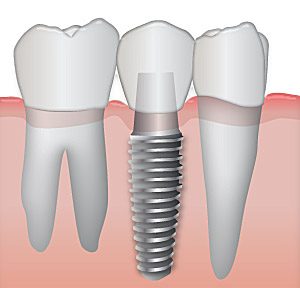
A dental implant is a small titanium post placed in the jawbone to act as an artificial tooth root. Once it fuses with the bone, it supports a custom-made crown, bridge or denture that looks, feels and works like a natural tooth.
Why people choose implants:
- Natural look and feel: the crown is colour-matched to your existing teeth.
- Long-lasting: with good care, implants can last many years, often decades.
- Bone protection: the implant stimulates the jawbone and helps reduce the bone loss that follows tooth loss.
- No damage to neighbouring teeth: unlike a traditional bridge, adjacent teeth don’t need to be filed down.
- Eat and speak with confidence: no slipping, clicking or dietary restrictions.
Implant Options at a Glance
| Option | What it replaces | Key points |
|---|---|---|
| Single titanium implant + crown | One missing tooth | The standard solution for a single gap |
| Multiple implants + bridge | Several missing teeth | Fewer implants than teeth, supporting a bridge |
| Mini implant | Small teeth, or to stabilise a denture | A narrower implant, useful where bone is limited |
| All-on-4 / All-on-6 | A full arch of teeth | Four or six implants support a fixed full-arch bridge |
| Zygoma implant | Upper jaw with severe bone loss | Anchors in the cheekbone when the jawbone is too thin |
Your dentist will recommend the best option based on your scans, your bone, your bite and your goals.
How Does the Implant Process Work?
The timeline varies from patient to patient, but most treatments follow these steps.
1. Consultation and 3D scan
Your dentist examines your mouth and takes X-rays. At Australian Dental Clinic, your initial consultation, X-rays, panoramic X-ray (Pano) and 3D CBCT scan are all free. These scans show your bone, nerves and sinuses, so your implants can be planned precisely. You then receive a personalised treatment plan and a clear written quote.
2. Preparation, if needed
If you have damaged teeth, gum disease or not enough bone, you may need an extraction, a bone graft or a sinus lift first. This can add healing time.
3. Implant placement
Under local anaesthetic, the implant is placed into the jawbone. The procedure is typically quick and comfortable, and most patients return to normal activities within a day or two.
4. Healing (osseointegration)
Over the next few months, the implant fuses with your jawbone, creating a strong, stable foundation. Many patients return home during this period and come back for the final stage.
5. Abutment and impressions
Once healed, a connector (abutment) is attached and an impression or digital scan is taken to design your permanent crown.
6. Final crown placement
Your custom crown is fitted, adjusted for comfort and bite, and permanently secured. You leave with a complete, natural-looking smile.
Planning a trip? Implant treatment is usually completed over two visits to Vietnam, one for placement and one a few months later for the final crown. The exact schedule depends on your case. Tell us your travel dates when you contact us, and send any existing X-rays or scans, so we can advise you before you travel.
Are You a Suitable Candidate?
Most healthy adults are, but your dentist will assess:
- Bone volume and quality: shown clearly on a 3D CBCT scan.
- Gum health: gum disease should be treated first.
- General health: conditions such as uncontrolled diabetes, and habits such as smoking, can affect healing.
- Your goals: your dentist will explain what is realistic.
If you don’t have enough bone, options such as a bone graft or sinus lift can often create the support needed.
Dental Implant Costs: Vietnam vs. Australia, New Zealand, the US and the UK
Our Prices at Australian Dental Clinic
| Treatment | Price (USD) |
|---|---|
| Titanium dental implant | $700 – $1,400 |
| Mini implant | $600 |
| Zirconia crown | $200 – $250 |
| Full porcelain / ceramic crown | $300 |
| Porcelain-fused-to-metal crown | $125 – $150 |
| Membrane graft | $100 / unit |
| Sinus lift | $100 / unit |
| Simple extraction | $25 – $50 |
| All-on-4 (per arch) | $4,800 – $9,800 |
| All-on-6 (per arch) | $6,000 – $11,500 |
| Zygoma implant | $11,000 – $13,000 |
| Initial consultation | Free |
| X-rays, including Pano and CBCT | Free |
| Local anaesthetic | Free |
How Does a Single Implant Compare?
Here is the approximate cost of a single implant with crown:
| Country | Approx. cost, single implant + crown (USD) |
|---|---|
| Australia | $3,000 – $4,500 |
| New Zealand | $2,500 – $4,000 |
| United States | $3,000 – $5,500 |
| United Kingdom | $2,500 – $4,500 |
| Vietnam (Australian Dental Clinic) | about $825 – $1,700 |
Vietnam figure is based on our published prices: a titanium implant ($700-$1,400) plus a crown ($125-$300). Figures for other countries are approximate averages and often exclude scans and preparation, which are charged separately. They vary by clinic and region.
In most cases, that means savings of roughly 50% to 70% on a single implant. The gap is often larger for bigger treatments, such as full-arch work:
| Treatment | Vietnam (Australian Dental Clinic) | Typical price in Australia, NZ, US, UK |
|---|---|---|
| All-on-4 (per arch) | $4,800 – $9,800 | $12,000 – $30,000 |
| All-on-6 (per arch) | $6,000 – $11,500 | $15,000 – $35,000 |
Treatments that need several implants or a full arch can save you thousands of dollars, often more than enough to cover your flights and accommodation. And because the consultation, Pano and CBCT scan are free here, your planning costs are covered too.
Why Is It Cheaper in Vietnam?
Lower prices don’t mean lower standards. The difference comes mainly from:
- Lower operating costs: rent, wages and overheads are far lower than in Western countries.
- Lower laboratory costs: crowns and bridges are made by dental technicians at much lower labour costs.
- Experienced dentists: our team treats patients from around the world.
- Modern technology: digital imaging, including panoramic X-ray and CBCT, for precise planning.
- Transparent pricing: a published price list, so you know what to expect.
What Is Recovery Like?
Recovery varies, but you can generally expect:
- First few days: some swelling, tenderness, mild bruising and a little oozing. Pain relief and a cold pack help, as advised by your dentist.
- First weeks: a soft diet, careful cleaning and avoiding pressure on the area while the implant heals.
- Following months: the implant fuses with your jawbone, and you return for the final crown.
Aftercare tips:
- Keep the area clean, following your dentist’s instructions.
- Avoid smoking, which can slow healing and increase the risk of implant failure.
- Eat soft foods at first, and avoid chewing hard foods on the area.
- Attend every check-up. Regular professional care keeps your implant healthy for years.
- Contact your dentist if you have severe pain, swelling that gets worse, fever, or bleeding that doesn’t stop.
What Are the Risks?
Dental implants are a well-established treatment, but like any surgery, they carry risks. Your dentist will explain them before you start, and they can include:
- Infection or inflammation around the implant, which can be reduced with good hygiene and check-ups
- Implant failure, which is uncommon but more likely in smokers and patients with certain health conditions
- Temporary swelling, bruising and discomfort after surgery
- Nerve or sinus complications, which careful planning from a 3D scan helps to avoid
This is why a thorough examination and a clear treatment plan matter.
How to Choose the Right Clinic
Before you book, check that the clinic:
- Has qualified, experienced implant dentists
- Uses a 3D CBCT scan to plan your treatment, and tells you upfront whether it costs extra
- Uses genuine, traceable implant systems (ask for the brand and implant details)
- Follows strict sterilisation and infection-control protocols
- Gives a clear written quote with no hidden fees
- Offers a warranty and aftercare support once you return home
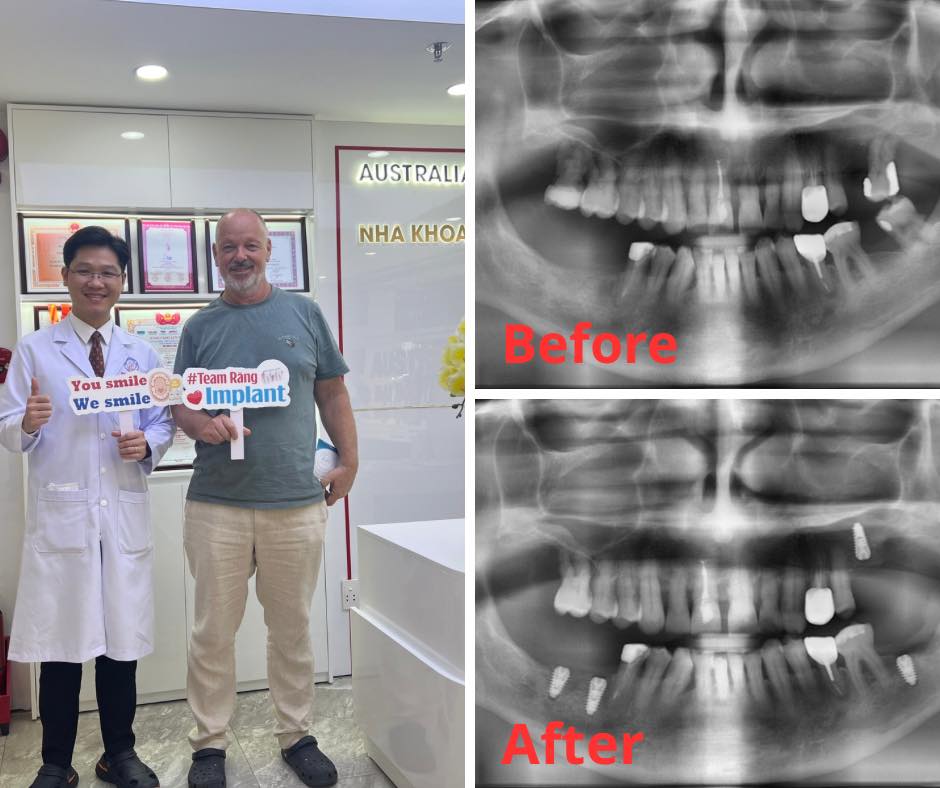
- Shows before-and-after results from real patients
Why Australian Dental Clinic?
With clinics in Hanoi and Da Nang, Australian Dental Clinic has been welcoming expats and visitors for many years. We offer a free consultation, free X-rays including Pano and CBCT, clear pricing and a team that communicates with you in English from your first message to your final check-up.
Frequently Asked Questions About Dental Implants in Vietnam
1. How much does a dental implant cost in Vietnam?
At Australian Dental Clinic, a titanium dental implant costs $700 to $1,400 USD. A crown on top costs $125 to $300, depending on the material. In total, a single implant with crown usually comes to roughly $825 to $1,700, compared with about $2,500 to $5,500 in Australia, New Zealand, the US and the UK.
2. Is it safe to have dental implants in Vietnam?
Yes, when you choose a clinic with qualified dentists, genuine implant systems and strict sterilisation protocols. Always ask about your dentist’s experience, the implant brand being used and the warranty and aftercare offered before you book.
3. Why are dental implants so much cheaper in Vietnam?
Mainly because of lower overheads such as rent, wages and running costs. The lower price reflects the cost of doing business in Vietnam, not a lower standard of care.
4. Do I have to pay for the CBCT scan?
No. At Australian Dental Clinic, the consultation, X-rays, panoramic X-ray and 3D CBCT scan are free. They help your dentist plan your implant safely and precisely.
5. Does getting an implant hurt?
The procedure is done under local anaesthetic, so you should not feel pain during treatment. Afterwards, most patients report mild soreness and swelling for a few days, which usually settles with simple pain relief and the care instructions your dentist provides.
6. How long does the whole implant process take?
The implant needs a few months to fuse with the jawbone before the final crown is fitted. The exact timeline depends on your case, including whether you need a bone graft or sinus lift first. Your dentist will give you a personalised schedule.
7. How many trips to Vietnam will I need to make?
Most patients need two trips: one to have the implant placed and one a few months later for the final crown. Send us your X-rays or scans, and we will tell you what is realistic for you.
8. How long do dental implants last?
With good oral hygiene, regular check-ups and no smoking, implants can last many years, often decades. The crown on top may eventually need replacing due to normal wear.
9. Am I suitable for dental implants?
Most healthy adults are. Some people need extra preparation first, such as treatment for gum disease, a bone graft or a sinus lift. Certain health conditions and habits such as smoking can affect healing, so a proper examination and scan are needed.
10. What if I need a bone graft or sinus lift?
These procedures are common and help create enough bone to hold the implant securely. At our clinic, a membrane graft and a sinus lift are each $100 per unit.
11. What is a mini implant?
A mini implant is a narrower implant, priced at $600 at our clinic. It can be useful where bone is limited or to stabilise a denture, but it doesn’t suit every case. Your dentist will advise whether it is right for you.
12. Can I replace a whole arch of teeth with implants?
Yes. Full-arch solutions such as All-on-4 and All-on-6 replace a whole row of teeth using only four or six implants. Prices start from $4,800 for All-on-4 and $6,000 for All-on-6, per arch, depending on the bridge material and complexity.
13. What happens if I have a problem after I return home?
Contact the clinic first, as most questions can be answered by sending photos or messages. For anything urgent, a local dentist can help in the short term. Ask the clinic about its warranty and aftercare policy before you start treatment.
14. I live in Vietnam. Is treatment easier for me?
Yes. If you are based here, you can attend check-ups easily, and the treatment can be planned around your schedule, without needing to travel long distances for each stage.
15. Will my health insurance cover any of the cost?
It depends on your policy. Some dental and international health plans contribute towards implants. Check with your insurer and ask the clinic which documents they can supply.
16. How do I get an accurate quote?
Send a recent X-ray, scan or clear photos of your teeth by WhatsApp, Viber or Zalo at +84 906 200 434, or email info@australiandentalclinic.vn. Our dentists will review your case and give advice. The initial consultation and scans are free.
Ready to Restore Your Smile?
Dental implants are a life-changing investment, and you don’t have to pay premium prices to get quality care. Whether you are visiting or live in Vietnam, send us a message or your latest scan, and our dentists will advise you on the best option and give you a no-obligation estimate.
📍 Hanoi: 3 Nguyen Du street, Cua Nam ward
📍 Da Nang: 51 2/9 street, Hoa Cuong ward
📱 WhatsApp / Viber / Zalo: +84 906 200 434
📧 Email: info@australiandentalclinic.vn
🌐 Website: https://australiandentalclinic.vn
📅 Book a visit
Opening hours: Mon–Sat 8:30 AM – 7:00 PM | Sun 8:30 AM – 5:00 PM
Disclaimer: This article is for general information only and does not replace professional dental advice. Suitability, results, treatment time and cost depend on your individual case. Prices for other countries are approximate.